COMMERCIAL PROJECTS
Ludo (100M+ Downloads)
A massively popular offline mobile board game with over 100 million downloads on Google Play. Contributed to the live production version by improving gameplay systems and implementing monetization and analytics features.
WHAT I DID
- Implemented and maintained mobile ad integrations including rewarded ads and interstitials.
- Integrated Firebase Analytics, Remote Config, and Crashlytics to support live game monitoring and balancing.
- Worked on gameplay improvements and stability updates for the live production build.
- Collaborated with the team to maintain performance and compatibility across a wide range of Android devices.
WHAT I LEARNED
Working on a live game with millions of players taught me the importance of stability and careful feature rollout. I learned how analytics and remote configuration can be used to monitor player behaviour and adjust game balance without requiring full app updates.
LudoMatch / Snake & Ladder Multiplayer (5M+ Downloads)
A real-time multiplayer board game supporting competitive online matches and multiple game modes including Ludo and Snake & Ladder within the same application.
WHAT I DID
- Designed and implemented the real-time multiplayer gameplay server using Node.js, Socket.io, Redis, and TypeScript.
- Built systems for matchmaking, player invitations, host migration, and session management.
- Implemented server-authoritative gameplay synchronization to ensure consistent board state across clients.
- Developed a shared gameplay architecture allowing Ludo and Snake & Ladder to run on the same core board system.
- Integrated backend communication using REST APIs and JWT authentication.
WHAT I LEARNED
Building a real-time multiplayer system taught me how to manage server-authoritative game states and handle edge cases such as disconnects, reconnections, and host migration. I gained practical experience designing gameplay systems that remain consistent across multiple clients.

Block Match: Blast Game (100k+ Downloads)
A puzzle game requiring highly optimized logic to handle massive chain reactions and special block abilities.
WHAT I DID
- Programmed 100% of the core gameplay loop and special block abilities.
- Developed a custom Level Editor System for designers to build stages rapidly.
WHAT I LEARNED
Developing the gameplay and level editor taught me how important internal tools are for production speed. By building designer-friendly tools, I learned how engineering decisions can dramatically accelerate content creation and iteration.

Mighty Survivor Force (100k+ Downloads)
A high-octane rogue-lite survival game focused on fighting massive hordes of enemies with evolving abilities.
WHAT I DID
- Architected a highly modular Skill System utilizing ScriptableObjects.
- Built a custom Behavior Tree AI allowing easy logic extension by the design team.
WHAT I LEARNED
Designing modular gameplay systems taught me how to decouple logic and data so that new abilities could be added without modifying the core systems. This reinforced the importance of scalable architecture in games with many interacting mechanics.
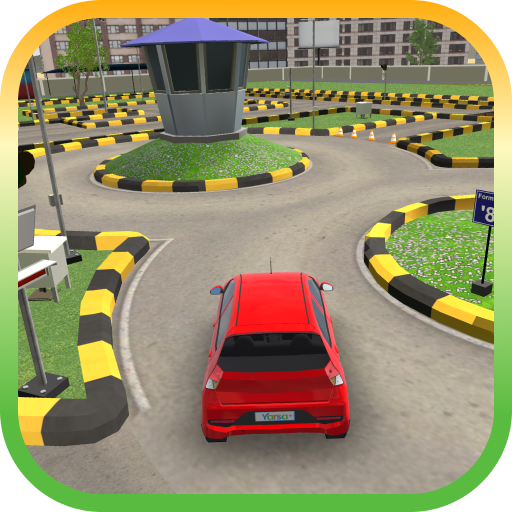
Indian Driving School 3D (100k+ Downloads)
A 3D driving simulation and licensing game combining vehicle handling with educational quiz mechanics.
WHAT I DID
- Worked on 3D vehicle mechanics and collision detection for precise driving trials.
- Developed a robust UI state machine to handle the interactive license quiz system, seamlessly transitioning between 2D UI overlays and 3D gameplay.
WHAT I LEARNED
Working on a driving simulation taught me how gameplay systems and UI must interact smoothly. I learned how to structure state management so that complex transitions between gameplay and UI flows remain predictable and maintainable.